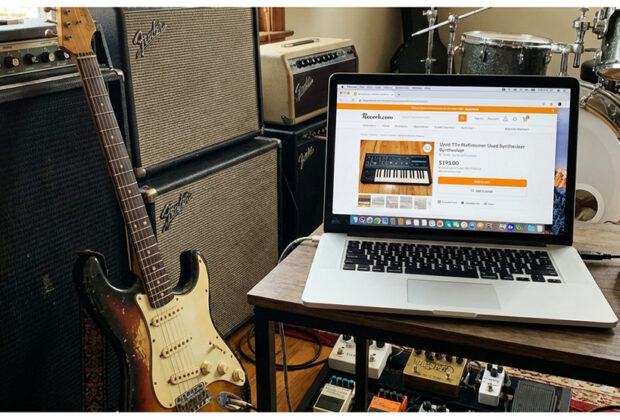
Over the past decade, Reverb.com has evolved from a niche online marketplace into a central pillar of the musical instrument ecosystem. For musicians, it has expanded access to an unprecedented global inventory of used and discounted gear. For retailers, it has created both opportunity and pressure: a powerful sales channel that increases reach while tightening margins and accelerating competition.
Rather than viewing Reverb simply as a disruptive force, it is more accurate to see it as a structural shift in how instruments are bought, sold, and valued. The platform is helping shape a future where used gear is normalized as a primary market, pricing is increasingly transparent, and independent retailers can compete nationally — but only if they adapt strategically.
The normalization of the used market
One of Reverb’s most significant contributions is the legitimization and scaling of the used instrument market. Buying used gear is no longer a secondary option reserved for bargain hunters; it is now a mainstream purchasing path for working musicians.
Reverb’s large buyer and seller base, combined with condition standards and transaction protections, has increased trust in remote used purchases. As a result, musicians are more willing to invest in pre-owned instruments, boutique pedals, and vintage equipment without geographic limitations.
This normalization has two long-term implications:
-
Used gear will continue to function as a price anchor for new products. Musicians routinely compare a new instrument to its used equivalent, which influences perceived value.
-
Product lifecycles are extending. Instruments circulate longer in the ecosystem, reinforcing sustainability and affordability.
Supporting data
-
Reverb reported approximately $917.9 million in gross merchandise sales in 2024
-
Roughly 80% of platform sales are attributed to used gear
-
The marketplace supports hundreds of thousands of active buyers and sellers
New and outlet gear: pressure and opportunity
While Reverb is primarily associated with used instruments, its growing outlet and B-stock segment is quietly influencing new gear sales. Discounted open-box and refurbished products introduce a middle tier between brand-new retail pricing and fully used inventory.
For musicians, this creates more accessible entry points into higher-quality gear. For retailers, it presents a strategic dilemma: outlet sales can move inventory efficiently, but they also train customers to expect discounts and compare aggressively across sellers.
The future likely holds a hybrid retail environment in which:
-
New gear serves as an experiential and service-driven offering
-
Outlet and used channels handle price-sensitive transactions
-
Retailers differentiate through expertise, setup services, and curation
Supporting data
-
Reverb reported over 30% year-over-year growth in outlet gear sales during Q4 2023
-
Seller activity during the 2023 holiday season significantly exceeded pre-pandemic benchmarks
Independent retailers: a national voice with new constraints
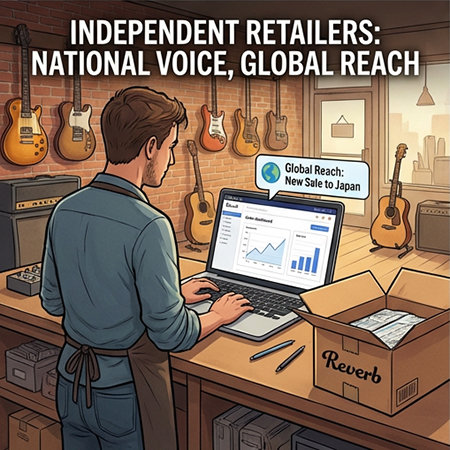
For many small and mid-sized music stores, Reverb functions as a digital storefront that extends far beyond local foot traffic. A rare instrument or specialty item in a regional shop can now reach an international audience instantly.
This expanded reach gives independent retailers a meaningful counterweight to large-scale competitors like Sweetwater, Guitar Center, and Amazon. The ability to participate in a global used marketplace allows smaller businesses to compete on selection and specialization rather than pure scale.
However, this opportunity carries structural costs. Platform fees, shipping logistics, and algorithmic visibility introduce new operational pressures. Retailers increasingly operate in a high-transparency pricing environment where margins are tighter and inventory turnover becomes critical.
The long-term outlook suggests that successful independent retailers will combine platform reach with in-store identity — using Reverb as an acquisition channel while cultivating local loyalty, service excellence, and niche expertise.
Supporting data
-
Estimated U.S. seller fees average around 8% or more per transaction
when combining selling and payment processing costs -
Reverb hosts hundreds of thousands of active sellers, many of them independent shops
Viral pricing and the emergence of temporary “high markets”
One of the more unpredictable effects of a large, socially visible marketplace is the rapid formation of hype cycles. Influencer endorsements and viral posts can temporarily elevate prices on specific pedals or instruments, creating short-term “high markets.”
For musicians, these spikes can distort perceptions of value. For retailers, they introduce inventory risk: buying aggressively during a hype cycle may lead to overexposure once prices normalize.
At the same time, these cycles reflect a broader reality of the modern gear economy: information moves quickly, and markets react in real time. The ability to interpret trends without overcommitting capital will be an increasingly important skill for both buyers and sellers.
Supporting data
-
Certain viral instruments and pedals have experienced multi-year price increases exceeding 100%–200% before stabilizing
-
Reverb price index analyses show post-pandemic normalization after significant peaks
Looking forward: a more transparent and interconnected ecosystem
Reverb is not replacing traditional retail; it is accelerating the integration of digital and physical marketplaces. Musicians benefit from greater access and price visibility. Retailers gain reach but must operate in a more competitive and data-driven environment.
Several forward-looking trends are emerging:
-
Used gear will remain central, functioning as both an entry point for new musicians and a liquidity engine for professionals
-
Retail success will hinge on differentiation, not just inventory
-
Data literacy will matter, as pricing transparency becomes standard
-
Hybrid sales strategies will blend in-store experience with online marketplace reach
For musicians and retailers alike, the future shaped by Reverb is less about disruption and more about adaptation. The platform amplifies both opportunity and competition. Those who understand its dynamics — and integrate them thoughtfully into their practices — are likely to find a marketplace that is broader, faster, and more interconnected than ever before.