A Format Comes of Age
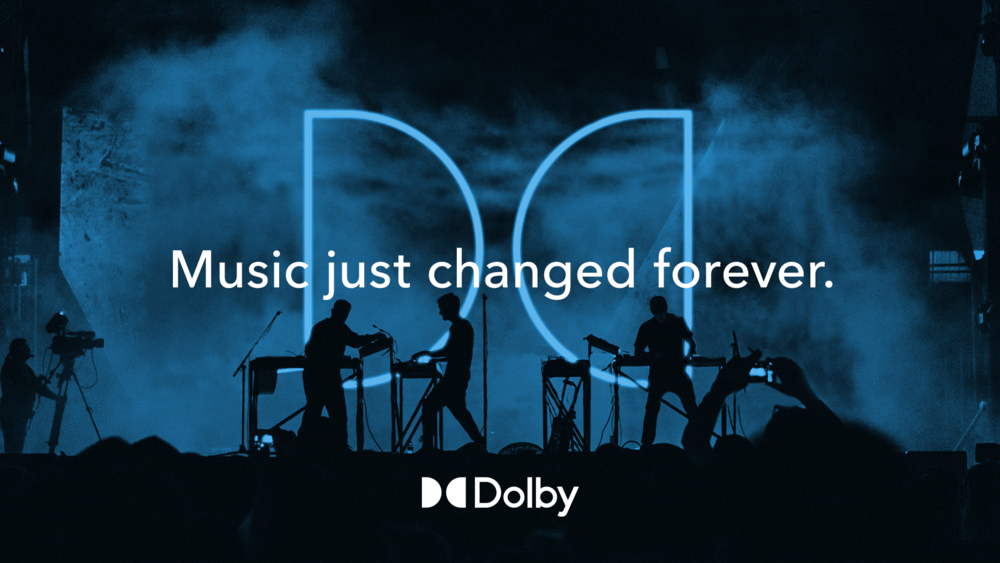
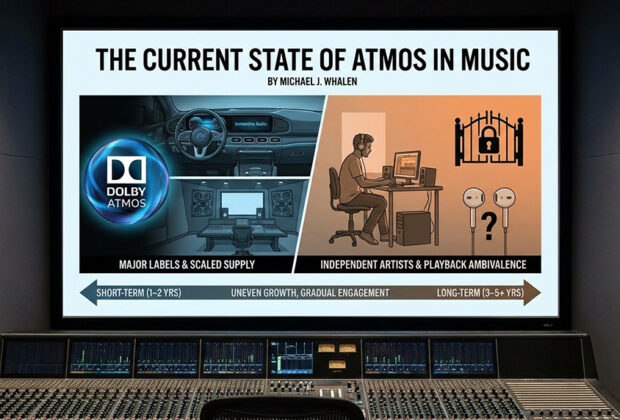
Over the past several years, Dolby Atmos has evolved from an experimental curiosity into a visible pillar of the modern music ecosystem. Major streaming platforms actively promote immersive audio, flagship releases increasingly include Atmos mixes, and automotive manufacturers are integrating Atmos playback directly into vehicles. From a technology and infrastructure standpoint, immersive audio has reached a level of institutional acceptance that would have seemed ambitious only a few years ago.
Yet beneath this momentum lies a more complex reality. Adoption remains uneven, access is stratified, and listener behavior is still ambivalent. The result is a marketplace that is simultaneously expanding and fragmenting.
Scaling the Supply Side
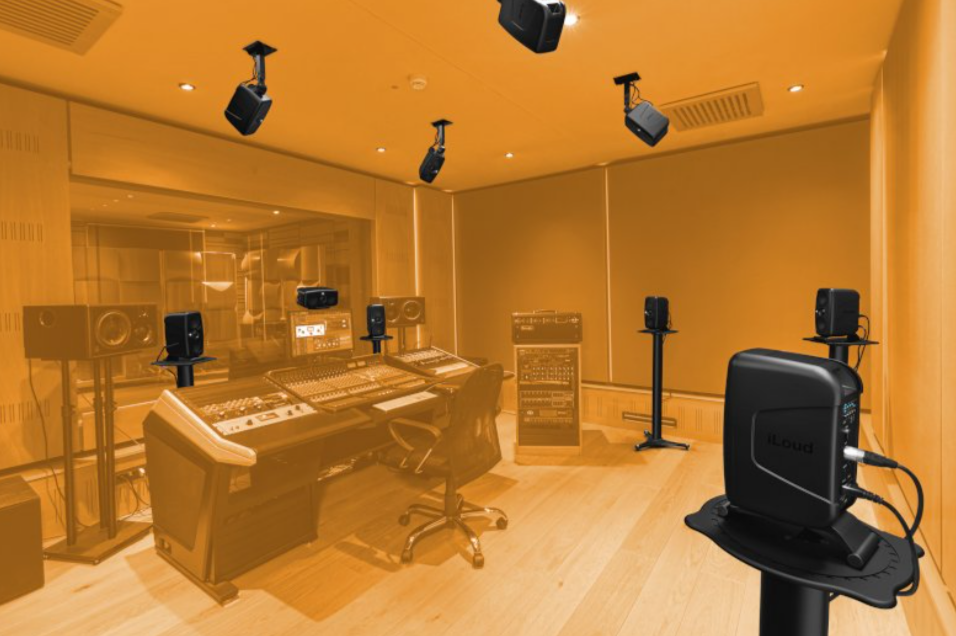
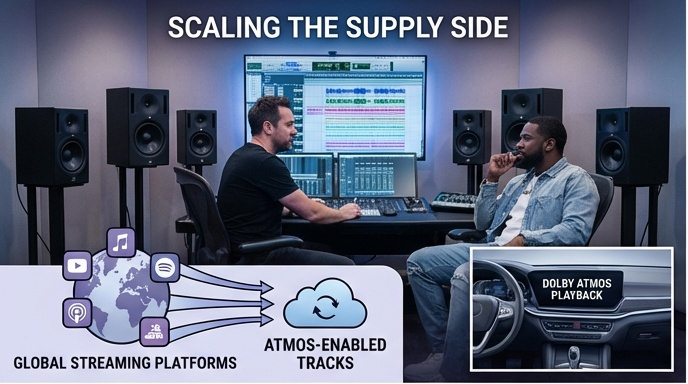
On the production side, Atmos has achieved meaningful scale. Large streaming services now host millions of Atmos-enabled tracks, and immersive audio is frequently activated by default on modern mobile devices. For major-label artists and high-profile releases, Atmos delivery is increasingly part of the standard release package. Dedicated Atmos mixing rooms are more common, and many professional studios now treat immersive formats as a core competency rather than a niche specialty.
Automotive integration represents a particularly significant development. As more vehicles ship with Atmos-capable sound systems and native streaming integration, immersive music is moving into an environment where spatial playback can offer a genuinely differentiated experience. The car may ultimately become the most persuasive everyday venue for Atmos music consumption.
The Access Gap: A Two-Tier Marketplace
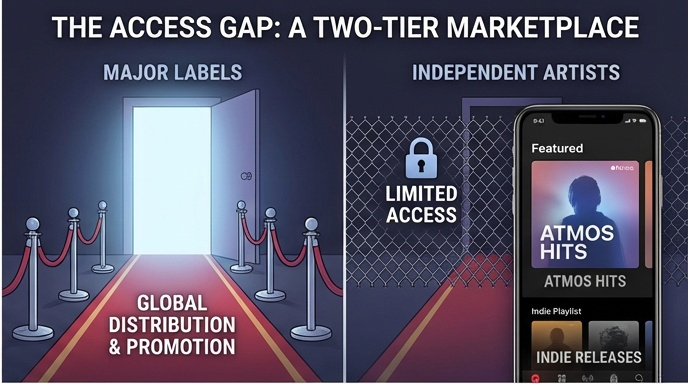
A critical but often under-discussed constraint is distribution access. Many independent artists cannot upload Atmos mixes through their existing aggregators. While some distributors support immersive delivery, those pathways are frequently limited, gated, or financially impractical for smaller creators.
This reality has produced a two-tier ecosystem:
-
The “have” tier: Major labels and well-resourced artists who can reliably deliver Atmos mixes and secure prominent placement on platforms that promote immersive audio.
-
The “have not” tier: Independent artists who may be fully capable of producing Atmos content but lack consistent distribution channels to release it at scale.
The consequences extend beyond technology. Platform algorithms and editorial promotion tend to amplify what is readily deliverable. If Atmos releases receive preferential visibility, artists without access to immersive distribution face a structural disadvantage. Over time, this dynamic risks widening disparities in discoverability and perceived production value.
For independent musicians, Atmos currently represents both opportunity and obstacle: a format that signals innovation and professionalism, yet one that remains unevenly accessible within the existing distribution infrastructure.
Listener Ambivalence and Playback Reality
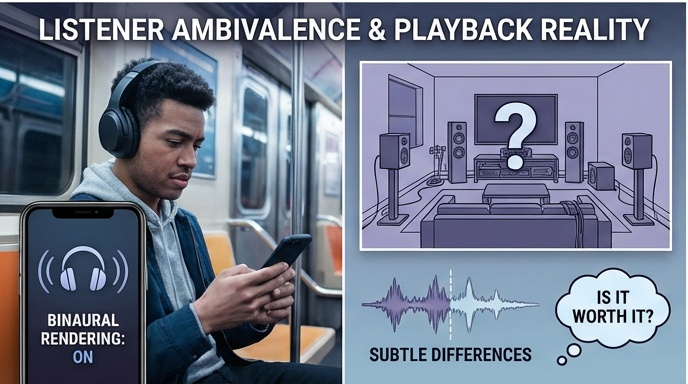
Perhaps the most significant constraint on Atmos adoption is practical playback. While marketing positions immersive audio as a transformative listening experience, most consumers lack a simple, reliable way to hear Atmos in optimal conditions.
Headphone-based binaural rendering can approximate spatial effects, but results vary widely depending on device, platform, and mix quality. Many listeners encounter differences that are subtle or inconsistent—insufficient to justify a shift in listening habits. Home theater systems capable of full Atmos playback remain a minority installation, and even when compatible hardware is available, configuration complexity can discourage everyday use.
A paradox emerges: Atmos is increasingly available, yet not consistently audible in a way that is obvious or compelling to the average listener. This gap between theoretical capability and lived experience reinforces consumer ambivalence. Without frictionless playback and unmistakable sonic advantages, immersive audio risks being perceived as optional rather than essential.
Short-Term Outlook (1–2 Years)
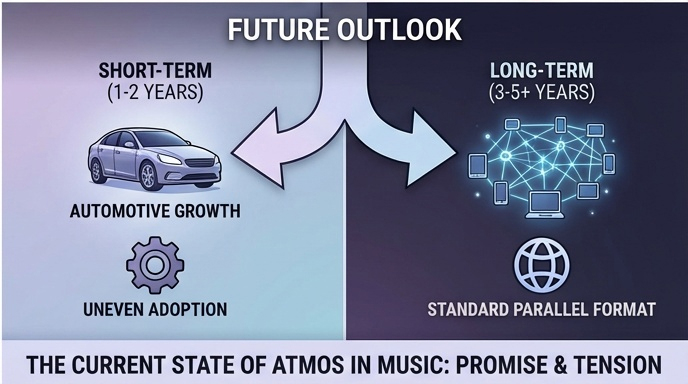
In the near term, Atmos adoption is likely to continue expanding on the production side. More priority releases will include immersive mixes, and automotive integration will increase the number of environments in which Atmos can demonstrate its strengths. Growth, however, will remain uneven.
Independent artist participation will depend heavily on whether aggregators broaden support for immersive delivery. If distribution access improves, the creator base will diversify. If not, the existing two-tier marketplace will persist.
Listener engagement is expected to grow gradually rather than explosively. Incremental improvements in device integration and user experience may reduce friction, but widespread behavioral change will require clearer value propositions and consistently high-quality mixes.
Long-Term Outlook (3–5+ Years)
Over a longer horizon, Atmos is positioned to become a standard parallel master format for mainstream releases, coexisting with stereo rather than replacing it. Continued automotive adoption and simplified consumer hardware are likely to strengthen immersive audio’s everyday relevance.
The decisive variables will be accessibility and experience. If independent artists gain reliable distribution pathways and consumers gain effortless playback options, Atmos could evolve into a widely preferred listening mode. If those barriers remain, immersive audio may settle into a premium niche—important, visible, and creatively significant, but not universal.
Conclusion
Dolby Atmos in music occupies a transitional moment. Infrastructure is advancing, industry participation is expanding, and new playback environments are emerging. At the same time, structural access gaps and listener ambivalence temper expectations.
The future of immersive music will depend less on raw technical capability than on ecosystem design: who can participate, how easily audiences can experience the format, and whether the sonic benefits are clear enough to influence everyday listening. Until those questions are resolved, Atmos will continue to embody both promise and tension within the modern music marketplace.
In a future piece, we will explore the creative dimensions of spatial mixing and the artistic opportunities that immersive formats open for composers, producers, and engineers.