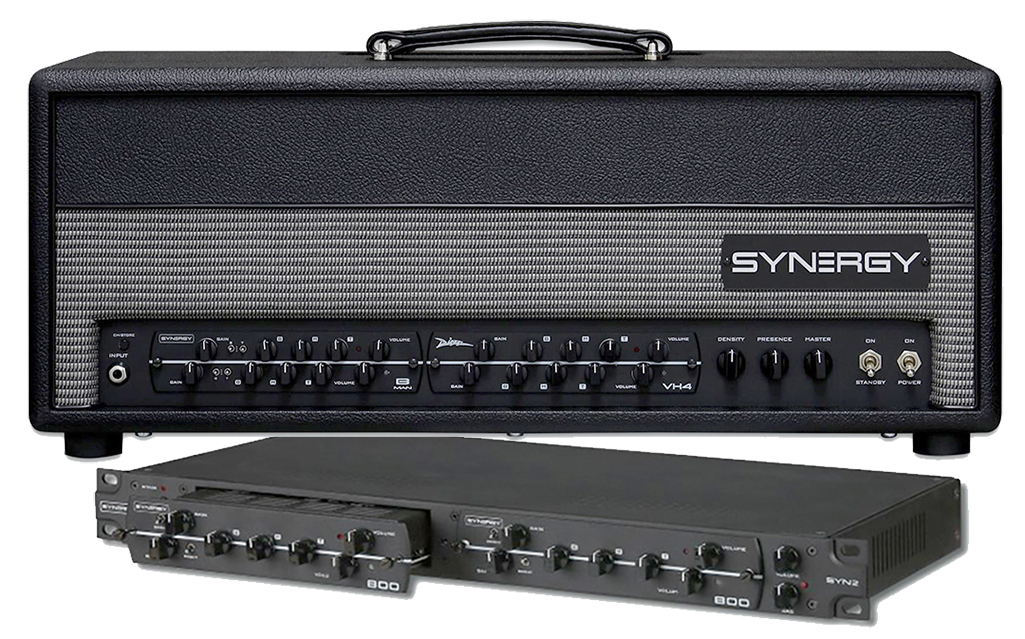

What started out intending to be a review of just one or two pieces of gear in the Synergy family has instead evolved into this overview of the entire system because it’s really just so damn amazing that you need to know about it!
| Category | Value | Rating |
| Features | 20% |  |
| Usability | 25% |  |
| Sound | 25% | |
| Documentation & Support | 10% | |
| Price | 20% | |
| OVERALL RATING = 3.8 Stars, which earns it a WIHO Award! 3.6 stars or better: Outstanding, WIHO Award 3 stars or better: Worth considering 2 stars or better: Suited to specific needs 1 star or less: Not recommended |
||
What is the Synergy stuff people keep talking about? In short, it’s a modular family of tube amplifiers, heads, tabletop or rack systems that let you mix and match the tube preamps of your choice with various tube power amps or direct-to-house options for stage or studio use. We’ll explore all of these options in detail soon enough.
We’re not just talking about random, generic amps though. This system, first conceived by Bruce Egnater for his own line of amps (and also licensed to Laney), was evolved with help from other boutique amp legends Dave Friedman and Steven Fryette. But while these guys are each mastermind amp builders, the Synergy system isn’t just a bunch of their personal amp designs. Synergy reached out to their other friends in the boutique amp community and partnered with many of them to custom design preamp modules for their platform. Companies like Soldano, Bogner, Friedman, ENGL, Tone King, Fortin and more designed preamp modules for use with the Synergy system, while other popular amp modules were recreated by this powerhouse amp engineering team.
Depending on the type of player you are, there’s a Synergy solution for you ranging from familiar full-sized or lunchbox-sized amp heads to tabletop studio solutions for direct recording to modular rack-mounted solutions for insane players like us who still live and die by our rack gear.
All of the products have built-in IRs for direct recording or connecting to front-of-house systems, so you can have your power amp (or head) and speaker cabinet on stage if desired, or run silently with in-ear monitors (most of the products), all while still having amazing tube-amp tone from the biggest boutique amp names around.
Add MIDI footswitch control, effects loops, and variable SAG control, and you’ve got extremely versatile solutions that are priced extremely reasonably for pro gear. Nearly every preamp module in the Synergy family carries a retail price of only $399.99. There’s no more affordable way to amass a collection of legendary boutique amps than the Synergy platform. And unlike amp modelers, this is all real tube amp and preamp stuff, fully analog, designed by a team of legendary amp builders in collaboration with numerous boutique and major amp companies.
Features
We got hands-on with a bunch of products in the Synergy lineup, but have provided details on the other items as well since the end result is the same but in different form factors. We explored the SYN-50 dual module head, the three-channel SYN-20IR lunchbox amp, SYN-1 single module desktop unit, SYN-2 dual module rack preamp, and SYN-5050 stereo tube power amp.
First, we’ll talk about the preamp modules that you can choose from, and then we’ll look at the amplifier and preamp options for using them. There are multiple modules designed by premium amp companies and there are a number of modules designed by the Synergy team (and they, of course, are also boutique amp designers). Here are just a few highlights from the ever-growing list of modules:
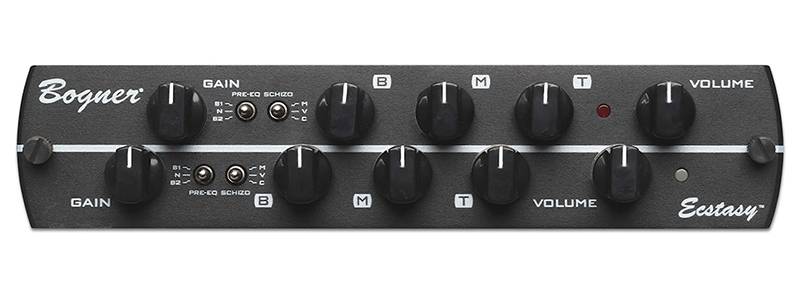
Bogner: Take your choice of the Ecstasy preamp (featuring the blue and red channels) or the Uberschall.
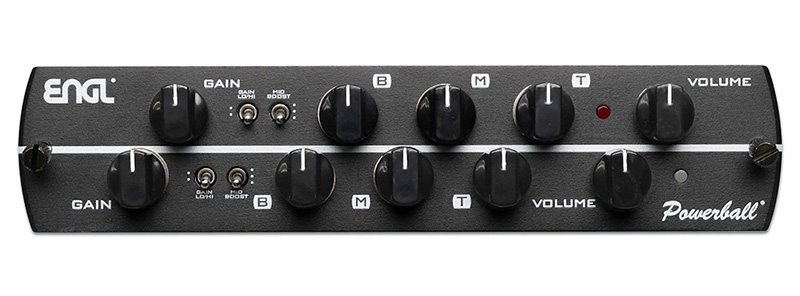
ENGL: ENGL designed a Powerball preamp module and a Savage preamp module featuring two channels apiece of these legendary heads.
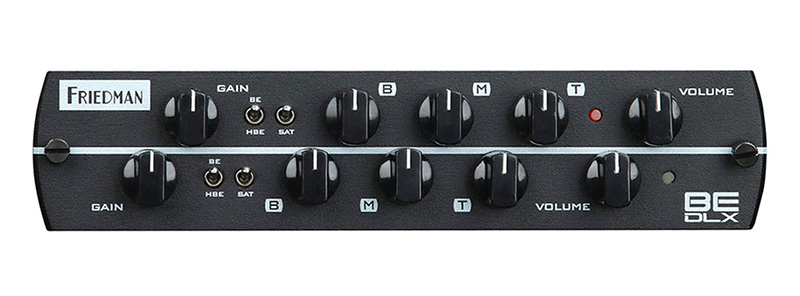
Friedman: Readers of ours are no strangers to Dave Friedman and his amazing amps. He’s one of the main engineers working with Synergy and his contributions extend well beyond his own preamp modules. But if you seek Friedman tone, there is the BE-DLX preamp featuring both BE and HBE amp circuits, the BE-BB module featuring the preamp sections from the Buxom Betty and the BE100, and the DS module featuring the Dirty Shirley preamp.
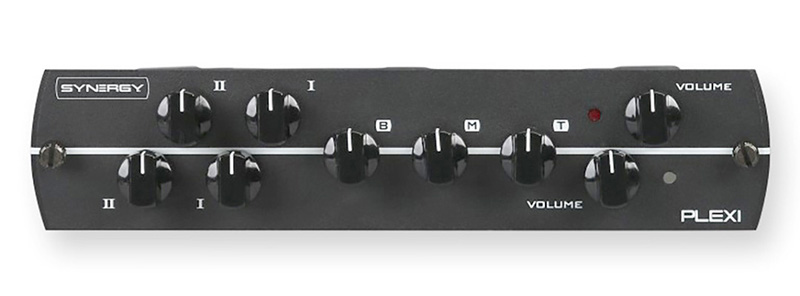
Dave also designed a variety of other preamp modules for Synergy including the Synergy Plexi preamp module, which features the classic amp’s dual Input I and Input II controls, and thanks to the Synergy design, does not require you to play at ear bleeding levels to enjoy the vintage tone.
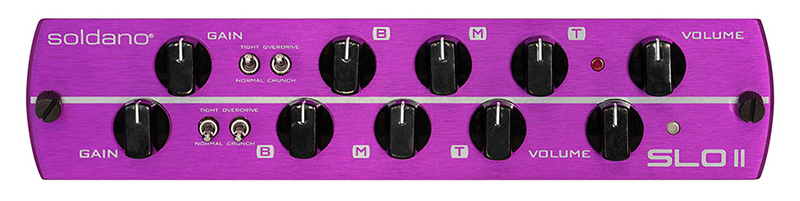
Soldano: Is there an ‘80s AOR amp tone more iconic than that from a SLO-100? Mike Soldano created a few modules for Synergy and refined his earlier module with the SLO II, delivering two channels of his legendary tone in standard configuration or in the SLO II SE version adorned in classic Soldano purple paint.
Metropoulos: We loved the Metro-Plex amp when we reviewed it some years ago but at $3,500 then, not many players were going to get their hands on it. If Dave’s Plexi module doesn’t suit your Marshall-ish taste, George Metropoulos’ Metro-Plex module may be just the ticket to hot rodded, vintage rock god tone!
Peavey: They may not be as boutique as the other names on the Synergy website, but the 6505 amp is no less legendary. And with the 6505 module, you can add those classic tones to your rig.
Other modules from boutique amp builders include the Fryette Pittbull Ultra-Lead and Deliverance (Steven Fryette has also been integral to the development of many of the Synergy products including the SYN-5050 power amp and the IICP module), Fortin Kali, Diezel VH4 and Herbert, Dr. Z’s Z Wreck, and the Morgan AC.
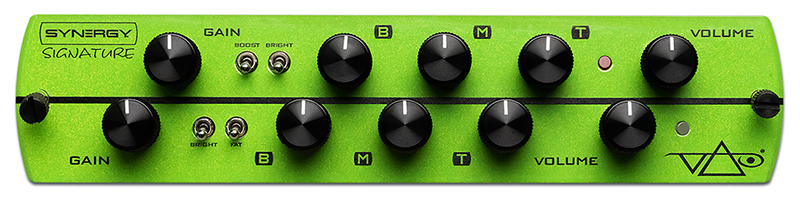
There’s also a signature artist preamp: the Vai Signature preamp designed by Synergy to Steve’s very precise specifications. And the list is constantly growing with new modules being developed all the time.
One challenge with faithfully delivering multiple amps in a modular platform is the fact that they all exhibit different response characteristics. Each of the Synergy preamps and amp heads incorporate the company’s patent-pending SAG control, which lets you dial in the amp response for each amplifier based on the module you pick and the guitar you’re playing. An LED serves as an indicator for “proper” SAG, and you can dial it in to taste any way you’d like.
One nice benefit of this design is the fact that you can dial in the SAG to taste. If you’ve ever played a Mesa Mark-series amp or a Bogner Ecstasy, you know how tight and unforgiving those amps can be. Here, go ahead and dial the SAG a bit looser. Nobody has to know why you seem to be playing better.
Another nice design detail is that all of the products start out in Bypass mode by default. You have to hit a toggle switch to take them out of bypass.
Now that you’re aware of the kinds of amazing preamps you can use, let’s check out some of the ways to actually put them to use:
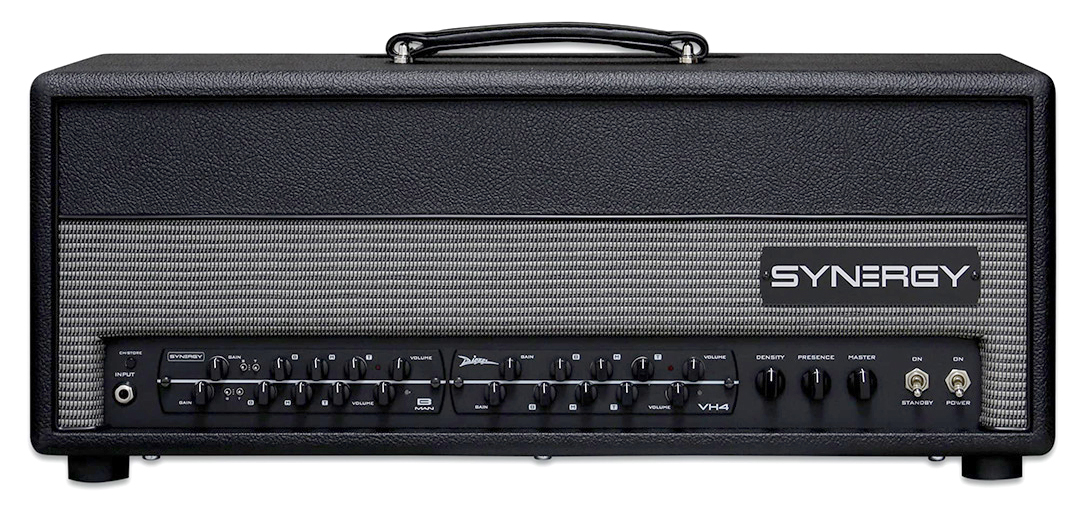
SYN-50 Head
For the rock guitarist who doesn’t want to be bothered with learning anything technical, an amp head like the SYN-50 is a great solution that’s as easy to use as your favorite big-name head. You pick any two preamp modules, slide them into the slots in the front of the head, turn a few thumb screws to lock them in, and you’re ready to rock.
Each module has two channels, so you’ll have a four-channel, 50 watt, all-tube amp with an insane range of tonal options from multiple boutique brands at your disposal.
The amp features (3) 12ax7 preamp tubes and (2) 6L6 power tubes. But each preamp module has another pair of preamp tubes as well. The amp even incorporates auto sensing technology that adjusts the cathode biasing circuitry across the internal 12ax7 tubes to best match the original amplifier channel design based on the module you’re using.
There’s a series effects loop, and switching functions happen via MIDI. Included is a four-button footswitch that connects via a standard MIDI cable to the head for choosing one of the four channels, but if you have a more advanced MIDI foot controller, a world of additional options open up. First, the DIN-7 MIDI In jack can supply phantom power to controllers that support this option. A MIDI Thru jack lets you control the rest of a complex rig from the same foot controller, and with memory for presets, you can program any footswitches to select any of the four amp channels easily.
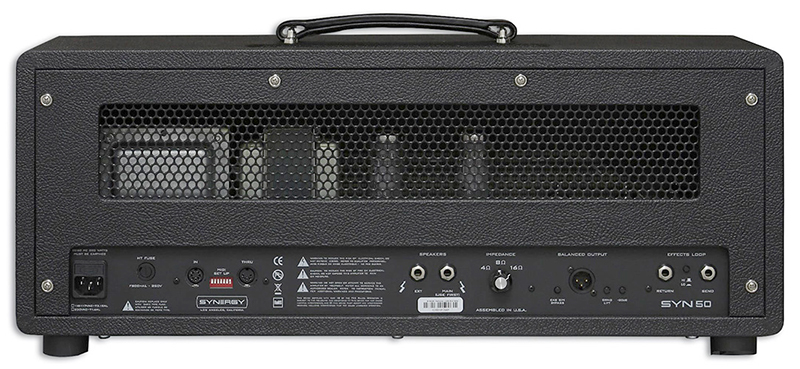
Want a great live sound without mics? The amp has an onboard impulse response and an XLR direct out that you can feed to the front-of-house with the sound of a mic’ed 4x12 cabinet. If you have your own IR solution, a button on the rear lets you bypass the simulated output and sends an unprocessed signal to the XLR. This tube amp requires a constant load from a speaker cabinet, though, so the XLR output is not intended for silent operation. It’s strictly for ease of use on stage.
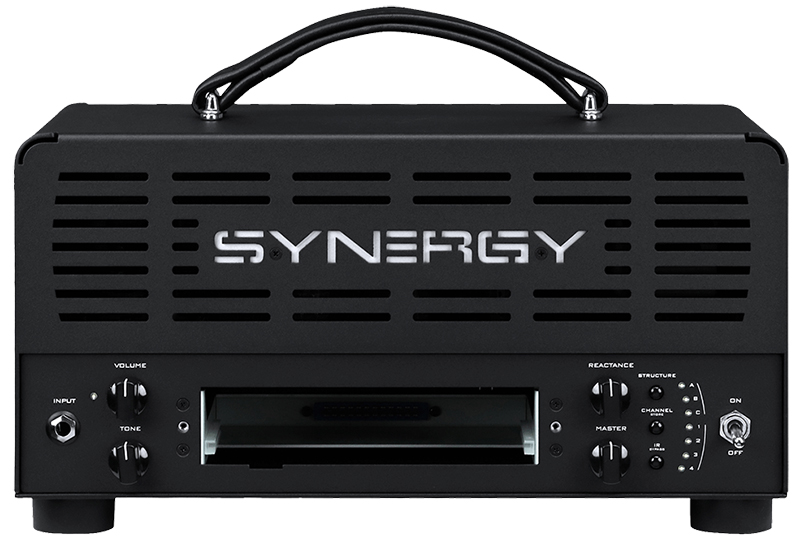
SYN-20IR Lunchbox Amp
If you prefer a smaller package, the SYN-20IR is a lunchbox amp head that holds a single module and features a lower-wattage 20W power section. And while you’re probably thinking this gives you up to two channels since each module is configured that way, you actually get more because the lunchbox amp also has a third channel built into the hardware (an American-style clean channel).
The SYN-20IR has a few other advanced features up its sleeves, too. First, this amp CAN be used without a speaker load for silent/studio operation. It even has a headphones jack on the rear! The amp stores (4) IRs that can be assigned to your preamp channels, and a computer-based software editor enables you to replace any of them with a variety of additional cabinet IRs.

The amp has some other advanced tone-shaping capabilities with three different amp response curves (called Structures), roughly analogous to American, British, and Modern amp characteristics. And a computer-based software editor lets you save up to 128 different presets featuring different preamp channels, IRs, and amp structures.

SYN-1 Preamp
Every guitarist’s studio can have incredible guitar tones for direct recording with the SYN-1 sitting on your desk. This compact (and highly affordable) box holds a single preamp module and has a built-in IR that delivers the sound of 4x12 cabinet with Vintage 30 speakers, mic’ed with an SM57 off-axis. A quarter-inch jack is provided to connect a footswitch for channel selection.
The SYN-1 also features a series effects loop for integrating your favorite effects.
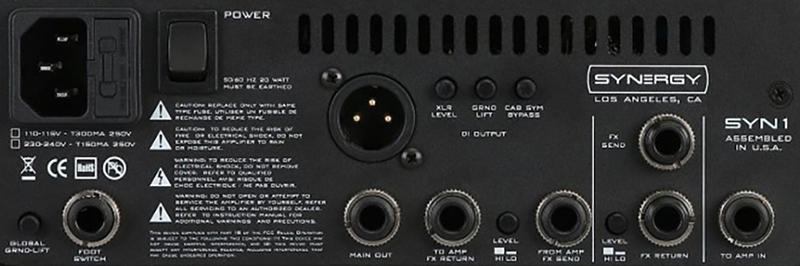
The SYN-1 isn’t just for studio use, though. You can use it as a preamp expander of sorts for any tube amp that features a true, 100% series effects loop. By connecting the SYN1 to your amp via a three-cable hookup method (very nicely documented and illustrated in the manual), you can add a Synergy preamp module to your current amp setup and easily toggle between your amp’s internal preamp sounds and the preamp module installed in the SYN-1 (and still retain use of an effects loop for your actual effects, too).
Note: Some amps, like the Mesa Boogie Rectifier line and others, allow some direct signal to pass through their series effects loops, which is part of their circuit design. But in those cases, you won’t be able to utilize this optional capability of the SYN1.
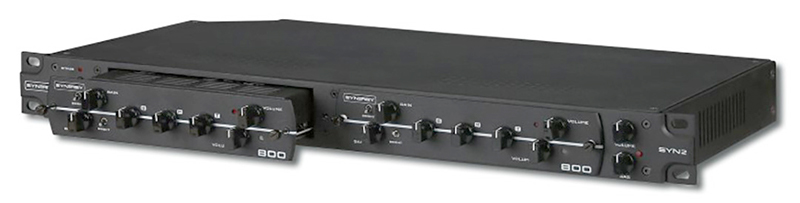
SYN-2 Preamp
Rack lovers rejoice! The 1U rack space SYN-2 preamp might just be our new favorite rack preamp—because it can be so many different preamps without constantly tearing our rig apart!
The SYN-2 houses two Synergy preamp modules and provides mono or stereo operation. The series effects loop has a mono send and stereo return, and the preamp has stereo output if you want to run a full stereo rig. In addition to the main outputs, the SYN2 also includes a secondary set of outputs across a pair of balanced XLR connectors and an onboard impulse response to provide the sound of a close-mic’ed 4x12 cabinet for your front-of-house sound or direct recording.
Like the finest rack preamps, the SYN-2 has a useful design incorporating guitar inputs on the front and the rear. The rear connection is useful for wiring up your rack with a wireless unit, but plugging an instrument cable into the front automatically switches to that input, so you can instantly switch from a wireless solution to wired without having to reach into your rack to unplug any cables.

To control the SYN-2 from your favorite MIDI foot controller, it includes DIN-7 MIDI support with a pass-through 3.5mm barrel connector for supplying your own dedicated phantom power. In addition to program change (PC) messages, it also responds to continuous controller (CC) messages to directly select each of the four channels, plus Bypass and Mute. The SYN-2 has memory for saving more presets than you’ll ever need.
| Compatibility with Egnater and Randall Modules
There’s a lot of compatibility between the older, similar Egnater and Randall products, though with some exceptions. The good news is that those older, single-channel modules work just fine in all of the Synergy amps. But if you own one of the classic designed rack preamps like the Egnater M4 or Randall RM4, those only support one channel on a module. So, while you can plug new Synergy modules into them (amazing backwards compatibility), they will only be able to access one channel on each module. |
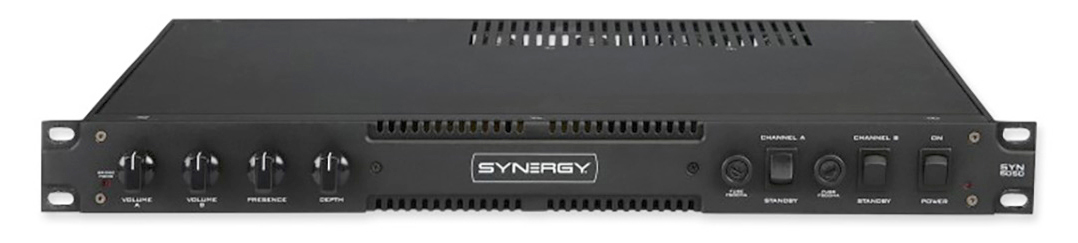
SYN-5050 Stereo Tube Power Amp
Designed by Steven Fryette, the SYN-5050 is a rack lover’s dream, delivering big tube tone in a compact and relatively lightweight package. It features (2) 12ax7 preamp tubes and (4) 6L6 power tubes to deliver 50 watts per side in stereo or 100 watts bridged.
What makes this power amp especially exciting is that it delivers big 6L6 tone in a 1U housing that only weighs 24 pounds. Virtually every other single-space, all tube, power amp relies on smaller (and less capable) EL-84 or 6V6 tubes, which simply can’t match the quality of tone that you get from 6L6 power tubes.

In addition to mono or stereo operation, the amp features controls for Presence and Depth. The former boosts high frequency gain, while the latter adjusts the tightness of the speaker response.
Usability
We got hands-on in our studio with the Synergy SYN-1 Single Module Preamp, the SYN-2 Dual Module Preamp (rack), and the SYN-5050 Stereo Tube Power Amp.
SYN-1 Single Module Preamp
The SYN-1 preamp is the easiest and most affordable entry point into the Synergy line, but by no means is it limited in any way. The compact unit fit easily on our desktop and we patched the output directly into our studio audio interface (Focusrite Red 8 Line).
Installing modules is a straightforward affair, similar to installing a graphics card into a PC. In this case, you slide the module into two rails, push it in applying some pressure in the middle of the module’s faceplate, and once it’s all the way in, you tighten two thumbscrews to lock it into place. The fit is extremely tight and may require some effort to push the module in, and we found that some modules were easier to insert and remove than others, but the variances were minor overall.
When you turn the unit on, it defaults to bypass mode, and the controls are extremely simple. There’s a pushbutton to toggle between the two channels on the preamp module, and another to toggle standby mode. All that remains on the unit (other than the individual preamp module itself) are knobs for the overall output volume and SAG control.
We found the SAG control effective at changing the feel/response of each amp module, and setting it to the “appropriate” response was as simple as turning it up to the point of just slightly clipping a red LED.
The output from the SYN-1 has a switch on the rear of the unit to bypass the cabinet simulated impulse response, and a serial effects loop on the rear made it easy for us to patch in a TC Electronic Plethora pedal for a variety of effects.
Recording with the SYN-1 was a breeze, and the various preamp modules have volume controls for each of their two channels. Synergy provides a two-button footswitch for channel switching and mute, but you can attach any footswitch you prefer that utilizes a standard TRS cable.
SYN-2 Dual Module Preamp (rack preamp)
The SYN-2 is a rack-lover’s delight, as it held two Synergy preamp modules in a single 19” rack space. Controls on the front are mostly the same, sans a bypass switch. We loved the inclusion of both front and rear input jacks as we built a guitar rig using the SYN-2 and the SYN-5050 power amp, with a Shure GLX-D wireless unit patched into the rear of the unit. But when sitting in the studio, we could just plug our guitar into the front of the unit with an instrument cable, which automatically bypassed the rear input.
Unlike the simpler SYN-1 with its included two-channel footswitch, the SYN-2 is a fully MIDI-enabled preamp, and any MIDI foot controller with a standard set of capabilities can be used to change channels and mute or bypass the preamp. The SYN-2 has memory for some unknown number of presets (beyond 500 in our tests), and programming is as straightforward as other guitar-friendly devices. We just stepped on our MIDI foot controller to select a preset, picked one of our four preamp channels, and held the store button on the front of the unit to save our selection.
For direct access, the SYN-2 responds to both MIDI PC messages as well as CC messages, so we could assign some buttons on our foot controller to directly select amp channels while other buttons selected various presets that we saved.
Rack Nerd Alert! We Added a Classic TC Electronic G-System
|

Just like the SYN-1 preamp, the SYN-2 has a direct output for recording in the studio or sending an IR-loaded signal to the front of house mixer for silent stage use. But in addition to the simulated amp output, there’s also a pair of line outputs for mono or stereo connection to a power amp, which leads us to the…
SYN-5050 Stereo Tube Power Amp
Whether you want to use the SYN-5050 with the SYN-2 or any of your other favorite rack preamps (or to give an amp modeler some real tube warmth), it’s as easy to use as all the great stereo tube power amps.
The most remarkable thing for us has got to be the design of the SYN-2 power amp. It’s only a single rack space tall and weighs just 24 pounds, yet it features a quartet of full-sized 6L6 power tubes delivering 50W per channel or 100W bridged rather than the more limited sounding EL-84/6V6 tubes more commonly used in all of the other guitar-centric, 1U rack power amps that we’ve ever experienced.
We found the Depth control was useful in shaping the tight/loose response of the low end while the Presence control increased gain to the higher frequencies.
Sound
Technically, there’s no specific “Synergy Sound” as it’s a modular platform, but we put numerous modules to the test. We spent time in our studio exploring numerous modules in the collection, and came away convinced customers as a result. There’s no easier or more affordable way to build a collection of incredible sounding amps as most modules retail for $399 apiece.
We own many boutique and otherwise classic amps across our editorial team, and have reviewed many amps from the builders who have been developing modules for the Synergy platform. It’s important to remember that most of the preamp modules were actually designed by the companies whose badge they wear. The Soldano SLO II module was designed by Mike Soldano, the engineers at ENGL designed the Powerball module, the designers at Peavey designed the 6505 module, etc. Basically, if the module has a brand name on it, that company designed the module, while other modules like the Synergy Plexi or Synergy IICP were designed by the engineers at Synergy.
Note that all modules have a Cathode Select switch on the circuit boards that enables tweaking of the input tube bass response by adjusting the biassing value of that tube. Generally, American voiced modules are set to position 1, British voiced modules use position 2, and other specific modules take advantage of another bias setting on position 3. You’re free to experiment with the settings, but we left them at the designer’s recommended position.
We purposely reviewed modules related to amps that we actively own and use among our editorial team so that we could vouch for the validity or accuracy of the designs. We’re happy to say that Synergy does in fact nail the sound of the legendary amps in their collection. No modeling stuff here. Real amp designers reengineered their classic circuits for use in the Synergy system, and they did a stellar job.
But extra kudos go to the engineering team at Synergy for the IR that they built into their preamps. We spent a lot of our time testing modules in the studio using the built-in IR, and yes, these amps sounded like they were coming through 4x12 speaker cabinets close mic’ed. You could hear the slightest hint of the V30 speakers breaking up behind high-gain sounds that was just fabulous. The only time we might see ourselves choosing to bypass the onboard IR in the studio would be if using a low-gain, Fender-esque type of preamp module (like the Tone King Imperial, which we didn’t get a chance to test) where we might deliberately seek IRs from smaller speaker cabinets.
We started with the ENGL Powerball module. Compared with our four-channel Powerball II head, the Synergy preamp module is a bit more limited in scope, but certainly not in tone. From the sounds we dialed in, it seems like ENGL’s Horst Langer focused on the middle of the classic amp’s range of tones. Think of what you can dial in on Chanels 2 and 3 of a Powerball head and you’ll find those tight, high-gain tones ready to go here, with the ability to go from classic hard rock leads into the lower end of Euro-metal, tight crunch. It doesn’t get quite as brutal as the fourth channel of the Powerball II head that we have in the studio, but it’s definitely as tight!
The Synergy SYN-5050 power amp was more than up to the task of pushing these tones through our ENGL Pro 212, Pro 412, and Mesa Rectifier 212 cabinets.
Our only disappointment—a personal thing—is that we couldn’t obtain the incredible studio clean sound from the Powerball II’s first channel. Oh well. This module’s made to rock!
Next up was the Bogner Ecstasy module. We’ve been listening to one of our editor’s Ecstasy 101B amps for more than a decade, and we were excited to hear what Reinhold Bogner brought to the Synergy module. He put the amp’s blue and red channels into the preamp module, with the bluesy tone of the former and the scorching high gain lead tones of the latter. One of our guitar editors, Derek Davodowich, who originally reviewed the Bogner Ecstasy amp (and was just gigging with it this week) was floored by the Synergy module. He found the switches for Normal, Bright 1 and Bright 2 voicings performed just like they do on the actual head, and his favorite EQ settings left him right at home with the Synergy Bogner module.
In some ways, we could get a bluesier response from this module than the actual amp because Synergy gives you control over amp SAG. Classic Bogner amps are known for their tight response. They are not forgiving amps like a classic Marshall and demand the best of your playing. But here, you can actually make your Bogner act a bit less composed. That said, this module delivers the rich harmonic output of the classic amp, whether you want the bluesier, mid-gain vibe of the blue channel or the burning lead red channel.
Next on tap was the Soldano SLO II module, which improves upon the original single-channel module in a few ways. This module has two identical channels from the SLO-100, but with switches to toggle between Crunch/Overdrive and Normal/Tight response, you can get some significantly different tones from each. Here, we were able to dial in some classic Soldano clean tones on one channel and classic hair band mayhem on the second. Of course, if you don’t need the clean stuff, you can get two great varieties of hard rock/metal sounds on this module that deliver the classic Soldano sound.
The Normal/Tight switch is a new addition that you won’t find on the legendary amp this module is based on. In the first mode, response is classic Soldano, but the Tight mode adds a more precise and less forgiving response, while still preserving the clarity you expect from a SLO-100.
One of our editors has been collecting Friedman amps ever since reviewing them for MusicPlayers.com, and we now understand what the love affair was all about. The Friedman BE DLX module is yet another outstanding Synergy module, and probably our favorite of the bunch. If you’ve been drooling over the sound of Dave Friedman’s BE100 amp, that hot rodded Marshall sound is on fire here. It was easy to dial in classic hard rock tones on one channel and high gain, tight metal lead tones on the other. Just like the BE100, each channel here features a Saturation switch that slightly compresses the signal and adds a touch of increased sustain and gain.
This module has a few additional dip switches you can adjust directly on the circuit board for a more personalized experience. If your tastes lean more classic and less modern metal, a Gain Structure switch lets you reduce the gain of the module (across both modules). A FAT switch (similar to what’s found on the BE100 amp) lets you boost the low end response of the module. Once again, this module will prove less useful to players in need of ultra-clean tones, but the BE circuit cleaned up nicely when rolling off the volume on our guitar.
There’s no question that Dave Friedman knows the sound of a Marshall Plexi, given that he built an entire brand around that amp design expertise. So it makes complete sense that he also designed Synergy’s Plexi module.
Our first response was to wonder what might be different about going from the BE DLX module to a Plexi module designed by the same guy, but wow! This one is faithful to the sound of a classic Marshall 100W Super Lead. Similar to the dual inputs of the classic non-master volume heads, there are dual volume controls on each channel here. But rather than the static response of jumping the original amp’s inputs together, this enables you to dial that jumped sound in precisely to taste, and on each channel individually! In actually, it sounded to us like a dual cascading gain stage, and adjusting the balance between volume I and II created exciting varieties of tone. And best of all? There are master volumes for each channel here, so you can enjoy cranked Marshall tones at normal amp volumes.
Not only does the Plexi module nail that classic tone, but unlike Dave’s line of Friedman amps—which exhibit a response and sound that is almost like playing a blend of a Marshall amp with a Mesa/Boogie Mark-series amp, the response of the Plexi module is a bit more forgiving, lending itself better to a classic hard rock player’s style of loose rhythm work and bluesy lead playing.
Almost Perfect
|
The SYN-5050 Stereo Tube Power Amp is of interest to more than just players interested in the Synergy ecosystem. First, we paired it with the SYN-2 in our rack and successfully used it both in the bridged mono mode as well as in a full stereo.
The SYN-5050 leans towards the cleaner side of power, and you’ll need to really open it up to add some power amp tube saturation to your sound, which we found a bit easier to accomplish at more reasonable volume levels when running in stereo.
We played a wide range of Synergy modules as mentioned above, and paired with the SYN-5050 we had beautiful tube tone with whatever amp we happened to load into our SYN-2. We played the SYN-5050 through an ENGL Pro 212 cabinet, ENGL Pro 412, and a Mesa Rectifier 212 cabinet. Each cabinet was wired for mono or stereo operation and featured British Celestion V30 speakers (the Mesa cabinet has custom V30s exclusive to Mesa Amplification).
The sound was big and tight with most of the modules we had on hand (less so with the Plexi module), with a reasonable amount of depth, though the bottom end wasn’t as punishing as you’d get from something like the Mesa 2:Ninety power amp with its Deep switch engaged. However, you can carry an entire rack with the SYN-5050 by yourself, while any rack including the Mesa 2:Ninety in it is probably going to require assistance from your friend or a hand truck.
If you’ve read this entire review, then you know we had a Fractal Audio FM9 at our disposal, so yes, we did what any self-respecting guitar player would do: run the FM9 through the SYN-5050 Power Amp into a guitar speaker cabinet. NOTE: If you’re going to run a modeler through a tube power amp and then into a guitar speaker cabinet, don’t forget to disable the speaker block in your signal chain. That’s critical!
The sound of our FM9 definitely took on more girth and presence in this setup vs. playing through an FRFR speaker cabinet. It was also great to play a virtual SLO-100 amp in the FM9, walk up to the speaker cabinet with our guitar, and generate some authentic speaker feedback.
Documentation and Product Support
All of the Synergy products include fantastic documentation that fully explain use of the products, complete with illustrations of suggested hookups. Further, each module comes with an information sheet that talks all about the module, its design, and its features/controls.
Price
The Synergy SYN-50 Dual Module 50W head sells for $1,599.99.
The Synergy SYN-20IR Single Module 20W head sells for $999.99.
The Synergy SYN-1 Single Module Preamp (tabletop) sells for $499.99.
The Synergy SYN-2 Dual Module Preamp (rack) sells for $799.99.
The Synergy SYN-5050 Stereo Tube Power Amp sells for $1,199.99.
Most Synergy preamp modules sell for $399 apiece, while a handful of models sell for $499.
The price of Synergy products are nothing short of exceptional. The cost of a SYN-50 head with two modules is far less than just a single boutique amp whose sound may be loaded directly into the unit. And in this case, you can have two boutique amps in one head for under $2,500. Wow!
We loved the SYN-1, and plan to keep one in our studio so that we can rotate a variety of preamps through it when recording. As covered in the review, we also built a live guitar rig around the SYN-2 and SYN-5050, giving us a four-channel, all tube rack setup that is just as easy to carry as any typical amp head. The Synergy platform proved to be fabulous, delivering extreme versatility while maintaining great ease of use, and at a price that is really a steal. Well done!
Contact Information
Synergy Amps
www.synergyamps.com